
Blog

  • Winter Adventures: Staying Comfortable When Nature Calls

    Winter Adventures: Staying Comfortable When Nature Calls

    Winter can be one of the most beautiful times of year to explore the outdoors. Snow-covered hiking trails, crisp morning walks, peaceful forests and cosy camping trips all have their own appeal.

    But cold-weather adventures also require a little extra preparation. From choosing the right layers to planning bathroom stops, staying comfortable in winter takes more thought than it might during the warmer months.

    For women who enjoy outdoor activities, learning to pee standing up can be another practical skill worth considering.

    At Stand2Pee, we believe women can learn to pee standing up without special devices or gadgets. Here’s how to prepare for winter adventures, stay comfortable and make sensible bathroom plans when temperatures drop.

    Why winter bathroom breaks can be challenging

    Cold weather can make ordinary outdoor activities more demanding.

    Taking off layers, managing bulky clothing and finding a suitable bathroom can all feel less convenient when temperatures are low.

    If you’re hiking, skiing, camping or exploring somewhere remote, bathroom facilities may also be less accessible than they are at home.

    That’s why planning ahead matters.

    Rather than waiting until you urgently need a bathroom, think about where facilities are located along your route and what you’ll need to stay comfortable.

    1. Choose practical winter clothing

    What you wear can make a significant difference to your comfort outdoors.

    Winter clothing often involves several layers, including thermal leggings, base layers, trousers, jackets and insulated outerwear. While these are important for keeping warm, they can make bathroom breaks more complicated.

    A few clothing considerations can help:

    Choose manageable layers. Clothing that’s relatively easy to adjust can make bathroom breaks less awkward. Avoid complicated combinations if you know you’ll be spending long periods outdoors.

    Consider flexible fabrics. Stretchy trousers and comfortable base layers can allow more freedom of movement than stiff or restrictive clothing.

    Think about your outerwear. Long coats and bulky jackets may need to be secured or moved out of the way when using bathroom facilities.

    Plan your outfit before leaving. If you’re going on a long hike or camping trip, consider how practical your clothing will be when nature calls.

    If you’re learning to pee standing up, practising in comfortable clothing first can help you understand what works for you before introducing bulky winter layers.

    2. Plan bathroom stops before your adventure

    One of the simplest ways to make winter outings more comfortable is to plan ahead.

    Cold weather isn’t the ideal time to discover that the nearest public toilet is several miles away!

    Before setting off:

    • Check where public toilets and visitor facilities are located.
    • Find out whether facilities are seasonal or have restricted opening hours.
    • Plan suitable breaks into longer walks or journeys.
    • Identify appropriate stopping points along your route.
    • Carry basic hygiene supplies.
    • Have a backup plan in case your original route or facilities are unavailable.

    This is particularly important when visiting national parks, remote trails and winter camping locations.

    Learning a new skill can give you another option, but it shouldn’t replace sensible planning.

    3. Could learning to pee standing up help in winter?

    It may be useful in certain circumstances.

    Women can learn to pee standing up without relying on a funnel or special device. For women who spend time hiking, camping or travelling, knowing how to do this may offer another option when suitable toilet facilities are limited.

    However, winter clothing can make the technique more challenging.

    Bulky layers, gloves, thick trousers and reduced mobility may all affect comfort and positioning. This is why it’s sensible to learn the basics in a familiar environment before attempting to use the skill outdoors.

    If you’re interested in learning, take your time and practice when you’re comfortable rather than waiting until you’re cold, rushed or far from facilities.

    4. Keep your hands warm and your hygiene supplies accessible

    Winter conditions can make even simple tasks feel awkward.

    Cold fingers, thick gloves and multiple clothing layers can make it harder to manage personal belongings and hygiene supplies.

    Consider keeping essential items somewhere easy to reach.

    A small personal hygiene kit might include:

    • Toilet paper or tissues.
    • Hand sanitiser for situations where soap and water aren’t available.
    • Any personal hygiene items you normally use.
    • A small bag for carrying out used supplies where appropriate.

    Remember that hand sanitiser is not a complete replacement for washing your hands with soap and water when facilities are available.

    If you’re outdoors, follow local guidance for waste disposal and avoid leaving tissues or other materials behind.

    5. Don’t let cold weather distract you from staying safe

    When you’re outside in winter, warmth and safety should always come first.

    Before setting out, check the weather forecast, dress for the conditions and make sure your route is appropriate for your experience and equipment.

    Keep these points in mind:

    • Wear suitable footwear with good traction.
    • Bring extra layers in case conditions change.
    • Carry enough water and food for your planned activity.
    • Tell someone where you’re going if you’re heading somewhere remote.
    • Avoid isolated or unsafe locations for bathroom breaks.
    • Don’t compromise your balance or expose yourself to dangerous conditions just to avoid a longer walk to a toilet.

    If you’re cold, exhausted or struggling with your clothing, prioritise getting somewhere safe and comfortable.

    6. What about winter camping?

    Winter camping can be an amazing experience, but bathroom arrangements deserve extra thought.

    Before your trip, find out what facilities are available at your campsite. Some locations have winter closures, limited services or specific rules about bathroom use.

    If you’re camping somewhere without conventional facilities, check the land manager’s guidance before you go.

    Think about privacy, hygiene, waste disposal and the environmental impact of your choices. Never assume that outdoor urination is permitted everywhere, and avoid doing so near water sources or in places where it could affect other visitors or wildlife.

    If you know how to pee standing up, that may be another skill in your toolkit, but preparation and responsible outdoor practices remain essential.

    7. Practice before your winter adventure

    If you’re curious about learning to pee standing up, winter is not necessarily the best time to make your first attempt outdoors.

    Instead, start somewhere familiar and private, where you can concentrate on learning without worrying about cold weather or complicated clothing.

    Begin with comfortable clothing, focus on a stable position and give yourself time to understand the technique.

    As you become more comfortable, you can think about how different clothing styles and outdoor conditions might affect your experience.

    There’s no need to rush. Learning a skill before you need it is always a sensible approach.

    You don’t need another gadget in your winter backpack

    Winter adventures already require plenty of preparation. Between warm clothing, food, water, navigation equipment and safety essentials, there’s often a lot to carry.

    Stand2Pee encourages women to learn the technique of peeing standing up without depending on special equipment.

    The idea is simple: develop a practical skill through instruction and practice, rather than assuming you need to purchase and carry another product.

    You should still pack ordinary hygiene supplies and plan for appropriate bathroom facilities. Going gadget-free doesn’t mean going without basic necessities.

    Enjoy winter with confidence and preparation

    Winter adventures are all about preparation. The right clothing, sensible planning and an understanding of your surroundings can make a big difference to how comfortable and enjoyable your time outdoors will be.

    Learning to pee standing up may provide another option for women who enjoy outdoor activities, provided the circumstances are suitable.

    You don’t need to be an experienced camper or winter hiker to start learning. Begin somewhere familiar, take your time and build confidence gradually.

    Ready to add another practical skill to your outdoor toolkit? Discover Stand2Pee and learn how women can pee standing up without special gadgets.

    See also: Can Women Pee Standing Up in Jeans? What You Need to Know?
    Do Women Need Special Equipment to Pee Standing Up?

  • Is It Ever Too Late to Learn to Pee Standing Up?

    Is It Ever Too Late to Learn to Pee Standing Up?

    Have you ever wondered whether you could learn to pee standing up, but then thought, “Isn’t it a little late for me to learn something like that?”

    Perhaps you’ve spent your entire life sitting down to pee. Maybe you’ve only recently heard that women can learn to stand, or perhaps you’ve been curious for years but never quite got around to trying.

    Here’s some encouraging news: learning a new practical skill doesn’t have an age limit.

    You don’t need to have learned as a teenager, and you don’t need years of experience. If you’re curious and comfortable giving it a try, you can explore learning to pee standing up at your own pace.

    At Stand2Pee, we believe women should know that this is a skill they can learn without special devices or gadgets.

    Is there an age limit for learning to pee standing up?

    No specific age determines whether a woman can learn the technique.

    Age alone doesn’t mean you’re too old to try something new. However, everyone’s body, mobility, balance and comfort level are different. These factors may influence how you approach learning.

    The important thing is to work within your own abilities, avoid putting pressure on yourself and make adjustments when necessary.

    Whether you’re in your twenties, forties, sixties or beyond, curiosity is a perfectly good reason to start learning something new.

    Why haven’t more women learned this skill?

    For most women, sitting down to pee is simply part of everyday life. It’s what we’ve always done, what we’ve been taught and what most bathroom facilities are designed around.

    Standing to pee may therefore seem unfamiliar or even impossible.

    Many women assume that a special device is necessary. Others simply have never considered that they could learn to do it themselves.

    But something being unfamiliar doesn’t mean it’s impossible to learn.

    Women can develop the technique without relying on funnels or other equipment. Like any new physical skill, it takes understanding, practice and patience.

    5 reasons you’re never too old to start learning

    1. You can learn at your own pace

    One of the best things about learning as an adult is that you can choose when and how you practice.

    There’s no school timetable, competition or deadline. You can take your time, revisit the basics and move forward when you feel ready.

    Some women may become comfortable with the technique relatively quickly, while others need more practice.

    There’s no need to compare your progress with anyone else’s.

    2. You already know your body

    As an adult, you may have a better understanding of your own comfort, movement and physical needs than you did when you were younger.

    That awareness can help you approach a new skill thoughtfully.

    Pay attention to what feels comfortable, choose a stable position and make small adjustments as you learn.

    3. You can build on experience

    Learning something new doesn’t mean starting from scratch in every respect.

    You already have experience navigating unfamiliar situations, solving problems and developing practical abilities.

    The same patience and persistence you’ve used to learn other things can help you approach this skill.

    4. You may discover a useful new option

    Once you’ve become comfortable with the technique, it may provide another option in certain outdoor or travel situations.

    For example, it could be useful to know when planning a camping trip, hiking adventure or other activity where suitable bathroom facilities may be limited.

    It doesn’t replace toilets, and outdoor use must always be legal, safe, private and environmentally responsible. But having another skill can help you feel more prepared.

    5. Learning something new can be empowering

    There’s something satisfying about discovering that you can do something you previously thought was beyond your abilities.

    It might be learning a language, trying a new sport, travelling independently or developing a practical everyday skill.

    The achievement isn’t necessarily about how useful the skill becomes. Sometimes it’s simply about challenging an assumption and proving to yourself that you can learn something new.

    What if you’re worried about getting it wrong?

    That’s completely understandable.

    If you’ve spent decades sitting down to pee, standing may feel strange at first. You might be unsure about positioning, balance or control.

    Remember that you’re learning something unfamiliar. Your first attempt doesn’t have to be perfect.

    A few suggestions can make the experience less intimidating:

    • Choose a private setting. Start somewhere familiar where you feel comfortable.
    • Allow enough time. Don’t practice when you’re in a hurry.
    • Focus on comfort and balance. Avoid awkward positions or movements that make you feel unstable.
    • Take breaks. If you’re frustrated, return to it another day.
    • Be realistic. Everyone learns differently, and progress may take time.

    Never force yourself or deliberately hold your urine to practice. If you have mobility or balance concerns, adapt your approach and consider whether additional support is appropriate. Stop if you experience pain, burning or unusual urinary symptoms and seek medical advice.

    Do you need special equipment?

    No. Women can learn to pee standing up without a special device.

    Although products designed for this purpose are available, Stand2Pee focuses on teaching the technique itself.

    The idea is simple: rather than depending on another item in your bag, learn a practical skill that you can develop through instruction and practice.

    You don’t need to buy a collection of gadgets or completely change your lifestyle to get started.

    Is learning useful if you don’t spend much time outdoors?

    Absolutely. You don’t have to be a serious camper, hiker or traveller to be curious about this skill.

    Some women simply enjoy learning something different. Others like having an additional option for occasional trips or activities.

    You don’t need a particular lifestyle to give yourself permission to learn.

    It’s never too late to try something new

    So, is it ever too late to learn to pee standing up?

    Age alone shouldn’t stop you from exploring the possibility.

    You may need to adapt the learning process to your comfort, mobility and individual needs, but there’s no reason to assume that a lifetime of sitting down means you can’t learn another way.

    At Stand2Pee, we believe women deserve the opportunity to discover what they’re capable of.

    Curious about getting started? Explore the Stand2Pee instructional video and discover how to learn to pee standing up without special gadgets.

    See also: How Long Does It Take to Learn to Pee Standing Up?
    5 Common Mistakes Women Make When Learning to Pee Standing Up

  • Do Women Need Special Equipment to Pee Standing Up? The Truth About Going Gadget-Free

    Do Women Need Special Equipment to Pee Standing Up? The Truth About Going Gadget-Free

    If you’ve ever looked into learning to pee standing up, you’ve probably come across products designed to help women do it. From reusable devices to disposable alternatives, there are plenty of products marketed as solutions for women who want more flexibility when using the bathroom.

    But here’s a question worth asking: do women actually need special equipment to pee standing up?

    The answer is no. Women can learn to pee standing up without relying on a funnel, gadget or other device.

    In fact, that’s exactly what Stand2Pee is about: teaching women a practical technique that uses their natural anatomy, rather than requiring them to buy, carry and clean an additional product.

    Let’s look at the difference between using a device and learning the skill for yourself.

    Why do so many people assume women need a device?

    For most women, sitting down to pee is simply what they’ve always been taught to do. It’s familiar, convenient and the standard approach in most bathrooms.

    Standing to pee, on the other hand, may seem like something that requires special equipment.

    That assumption is understandable. Women and men have different external anatomy, and many women have never been shown how to approach standing to pee without assistance.

    As a result, products designed to make the process easier have become popular among women who enjoy camping, hiking, travelling or spending time outdoors.

    But a product isn’t the same thing as a skill.

    You can learn the technique itself rather than assuming a device is essential.

    What does going gadget-free actually mean?

    Going gadget-free means learning how to pee standing up without using a special funnel or other device.

    Instead of depending on an accessory, you focus on understanding your body, developing a comfortable position and practising the technique.

    Like any new physical skill, it may take time to become familiar with the process. Your experience will depend on your comfort, coordination and practice.

    The goal is to develop an ability that belongs to you — something you can use when appropriate without needing to remember another piece of equipment.

    5 reasons to learn the technique without special equipment

    1. One less thing to pack

    Anyone who enjoys travelling or outdoor adventures knows that packing space matters.

    Between clothing, food, water, toiletries and other essentials, bags can fill up quickly.

    Learning a skill rather than relying on another product means there’s no special device to remember to pack specifically for this purpose.

    You should still carry normal hygiene supplies and plan for suitable bathroom facilities, of course. The difference is that the technique itself doesn’t require an additional gadget.

    2. You don’t have to depend on finding or cleaning a device

    Reusable products need to be cleaned and stored appropriately. Disposable products need to be carried and disposed of responsibly.

    Learning to pee standing up without a device removes those particular equipment-related steps.

    That doesn’t mean hygiene becomes irrelevant. Good personal hygiene and appropriate handwashing remain important, whatever bathroom method you use.

    3. You develop a skill rather than relying on an accessory

    There’s a real difference between owning something that helps you do an activity and learning how to do it yourself.

    When you learn the technique, you’re developing an ability through understanding and practice.

    That can be rewarding in its own right. You get to discover what works for your body and gradually become more comfortable with something that may once have seemed unfamiliar.

    4. You have more flexibility when choosing what to carry

    Some women prefer minimalist packing, particularly when hiking, camping or travelling with limited luggage.

    A gadget-free approach can fit naturally into that mindset.

    Instead of making room for another product, you can focus on comfortable clothing, ordinary hygiene essentials and planning ahead for appropriate toilet facilities.

    5. You can build confidence in your own abilities

    Perhaps the biggest benefit is the confidence that comes from learning something new.

    Many women have simply never considered that they could pee standing up without a device.

    Discovering that it’s a learnable skill can challenge an assumption and open up another option.

    You don’t need to be an expert straight away. You just need patience and a willingness to practice.

    Does learning without a device take practice?

    Yes. Going gadget-free doesn’t mean the technique is automatically easy or that everyone will master it immediately.

    You’re learning a new combination of positioning, balance and coordination. It may take several attempts to become comfortable.

    Here are a few ways to make the learning process more manageable:

    • Start somewhere familiar. Choose a private setting where you feel comfortable and have access to suitable facilities.
    • Take your time. Avoid practising when you’re in a hurry or feeling pressured.
    • Focus on your position. A comfortable, stable stance is an important part of learning.
    • Be patient. Your first attempt may not go exactly as planned, and that’s perfectly normal.
    • Build confidence gradually. Give yourself time to understand the technique before deciding whether to use it in other situations.

    Never deliberately hold your urine or make yourself uncomfortable to create a practice opportunity. If you experience pain, burning or unusual urinary symptoms, stop and seek appropriate medical advice.

    When might a gadget-free skill be useful?

    Once you’ve developed a technique that feels comfortable, it may give you another option in certain situations.

    For example:

    Camping: When you’re planning a camping trip, knowing how to pee standing up may be useful where suitable toilet facilities are limited, provided outdoor use is permitted and appropriate.

    Hiking: On longer walks, it’s helpful to plan ahead for bathroom stops. A learned technique may offer an additional option in a suitable location.

    Travel: When exploring unfamiliar places, having another practical skill can help you feel more prepared. It doesn’t replace the need to locate and use appropriate facilities.

    Outdoor activities: Whether you’re cycling, hiking or enjoying a festival, learning a new skill may give you more flexibility in certain circumstances.

    Always respect local laws, privacy, environmental guidance and the needs of other people. Outdoor urination isn’t appropriate everywhere, and designated facilities should be used whenever possible.

    So, are special devices necessary?

    No. Special equipment is one approach, but it isn’t the only way women can learn to pee standing up.

    Stand2Pee was created around a simple idea: women can learn the technique without funnels or devices.

    Rather than buying another product, you can focus on understanding your body, practising the skill and developing confidence at your own pace.

    Learn the skill. Keep the confidence.

    You don’t need a special gadget to begin learning something new.

    If you’ve been curious about peeing standing up but assumed you needed equipment, it may be time to reconsider. With the right instruction, patience and practice, you can explore a gadget-free approach.

    At Stand2Pee, we believe women should know that this is a skill they can learn.

    Ready to give gadget-free learning a try? Discover the Stand2Pee instructional video and start learning how to pee standing up without special equipment.

  • The Confidence Factor: How Learning a New Skill Can Change the Way You Travel

    The Confidence Factor: How Learning a New Skill Can Change the Way You Travel

    Travel is about discovering new places, enjoying new experiences and feeling free to explore. Whether you’re heading off on a weekend road trip, planning a camping holiday or setting out on a challenging hike, a little preparation can make your adventures more enjoyable.

    But confidence isn’t just about having the right map, packing the right clothes or knowing where you’re going. Sometimes, it’s about learning a practical skill that gives you another option when you’re away from familiar surroundings.

    For women, learning to pee standing up can be one of those skills.

    At Stand2Pee, we believe that understanding your body and developing a new ability can help you feel more prepared for certain outdoor and travel situations — without depending on special gadgets.

    Here’s why learning something new can have a bigger impact on your confidence than you might expect.

    Confidence comes from feeling prepared

    Think about the last time you tried something unfamiliar. Perhaps you travelled somewhere on your own, went hiking for the first time or tackled an activity that initially felt outside your comfort zone.

    You probably felt more confident once you understood what to expect.

    Learning a new skill works in much the same way. It gives you an opportunity to prepare before you find yourself in a situation where that knowledge might be useful.

    When it comes to standing to pee, practising in a familiar, private setting means you can become comfortable with the technique before deciding whether to use it during an outdoor adventure.

    You don’t have to wait until you’re camping in the middle of nowhere to discover whether you can do it!

    1. You become more comfortable with unfamiliar situations

    Travel doesn’t always go according to plan.

    Facilities may be limited, journeys can take longer than expected, and outdoor activities sometimes take you away from convenient amenities.

    Learning to pee standing up won’t eliminate those challenges or replace the need for toilets. However, it may give you an additional option in situations where it’s appropriate and practical.

    That sense of having another option can be reassuring.

    The key is to know your limits, understand the technique and make sensible decisions about when and where to use it.

    2. You may feel more prepared for outdoor adventures

    Camping, hiking, festivals and road trips can all involve different levels of access to bathroom facilities.

    If you enjoy outdoor activities, thinking ahead about bathroom arrangements is simply part of being prepared.

    Learning to pee standing up may be a useful addition to your outdoor skill set, particularly when combined with good planning.

    Before heading out, consider:

    • Where suitable toilet facilities are located.
    • Whether your route includes long stretches without amenities.
    • What clothing will be comfortable and practical.
    • Whether there are local rules about outdoor urination.
    • How you can maintain privacy, hygiene and environmental responsibility.

    Being prepared isn’t about assuming you’ll never need a toilet. It’s about knowing your options and planning realistically.

    3. You learn to trust yourself

    Trying something new can be surprisingly empowering.

    At first, a skill might feel unfamiliar or even a little intimidating. But as you practice and become more comfortable, you begin to understand what works for you.

    That process can help build self-trust.

    You discover that you can learn something outside your usual routine, work through a few awkward moments and gradually develop confidence.

    And that feeling doesn’t have to stop with one particular skill.

    Whether you’re learning to navigate a new city, travel independently or try a new outdoor activity, the experience of building confidence can carry over into other parts of life.

    4. You can travel with a little more flexibility

    Good travel preparation is often about making sensible choices that give you flexibility.

    You might choose versatile clothing, pack fewer unnecessary items or learn a few useful phrases in the local language.

    Learning to pee standing up can fit into that same mindset.

    Rather than automatically relying on a specialist product, Stand2Pee encourages women to learn the technique itself. That means you’re developing a skill rather than adding another item to your packing list.

    Of course, you should still carry whatever personal hygiene supplies you need and use appropriate toilet facilities whenever available.

    The aim is to feel prepared, not to travel without basic necessities.

    5. You challenge an assumption about what women can do

    For many women, the idea of peeing standing up may seem unusual simply because they’ve never been taught how.

    It’s often treated as something men can do and women can’t. But with the right approach, women can learn the technique too.

    Challenging that assumption can be a confidence boost in itself.

    It’s a reminder that some things we consider impossible or impractical may simply be skills we haven’t had the opportunity to learn.

    And sometimes, trying something new is worthwhile simply because it expands what you believe you’re capable of doing.

    Confidence doesn’t mean doing everything

    There’s an important distinction between feeling confident and taking unnecessary risks.

    Learning to pee standing up doesn’t mean you should ignore bathroom facilities, compromise your privacy or use unsuitable outdoor locations.

    Public toilets and other appropriate facilities should remain your first choice whenever they’re available.

    If you’re outdoors, only consider going outside where it is legal, safe, private and environmentally appropriate. Follow local guidance, protect water sources and respect other people and wildlife.

    Confidence means knowing when a skill is useful — and when another option is better.

    You don’t need special gadgets to get started

    There are various products designed to help women pee standing up. Some women may choose to use them, but they aren’t the only way to approach the skill.

    Stand2Pee is about learning a natural, gadget-free technique and developing confidence through practice.

    You can begin somewhere familiar, take your time and build up your comfort level gradually.

    There’s no need to turn it into a competition or expect instant results. The goal is simply to learn something that may be useful to you.

    A small skill can make a meaningful difference

    Not every useful travel skill has to be complicated.

    Sometimes, it’s the little things that make us feel more independent and prepared. Learning to pee standing up may not transform every journey, but it could give you another option when the circumstances are right.

    More importantly, it can remind you that learning something new is always possible.

    So whether you’re planning your next camping trip, preparing for a hiking holiday or simply curious about what your body can do, why not give yourself the opportunity to learn?

    Ready to build your confidence? Explore Stand2Pee’s instructional video and discover how to learn to pee standing up without relying on special gadgets.

  • Can Women Pee Standing Up in Jeans? What You Need to Know

    Can Women Pee Standing Up in Jeans? What You Need to Know

    Jeans are a wardrobe staple. They’re comfortable, practical and ideal for everything from everyday errands to weekend adventures. But if you’re learning to pee standing up, you might be wondering: can you actually do it while wearing jeans?

    The short answer is that it depends on the fit, cut and flexibility of your jeans, as well as the technique you’re using.

    Some styles make it easier to adjust your clothing and find a comfortable position. Others can be more challenging. The good news is that you don’t necessarily have to give up your favourite denim to learn a new skill.

    At Stand2Pee, we’re all about helping women build confidence and learn to pee standing up without relying on special gadgets. Here’s what to consider when it comes to jeans and clothing choices.

    Can you pee standing up while wearing jeans?

    Yes, it may be possible, but jeans aren’t always the easiest clothing option for beginners.

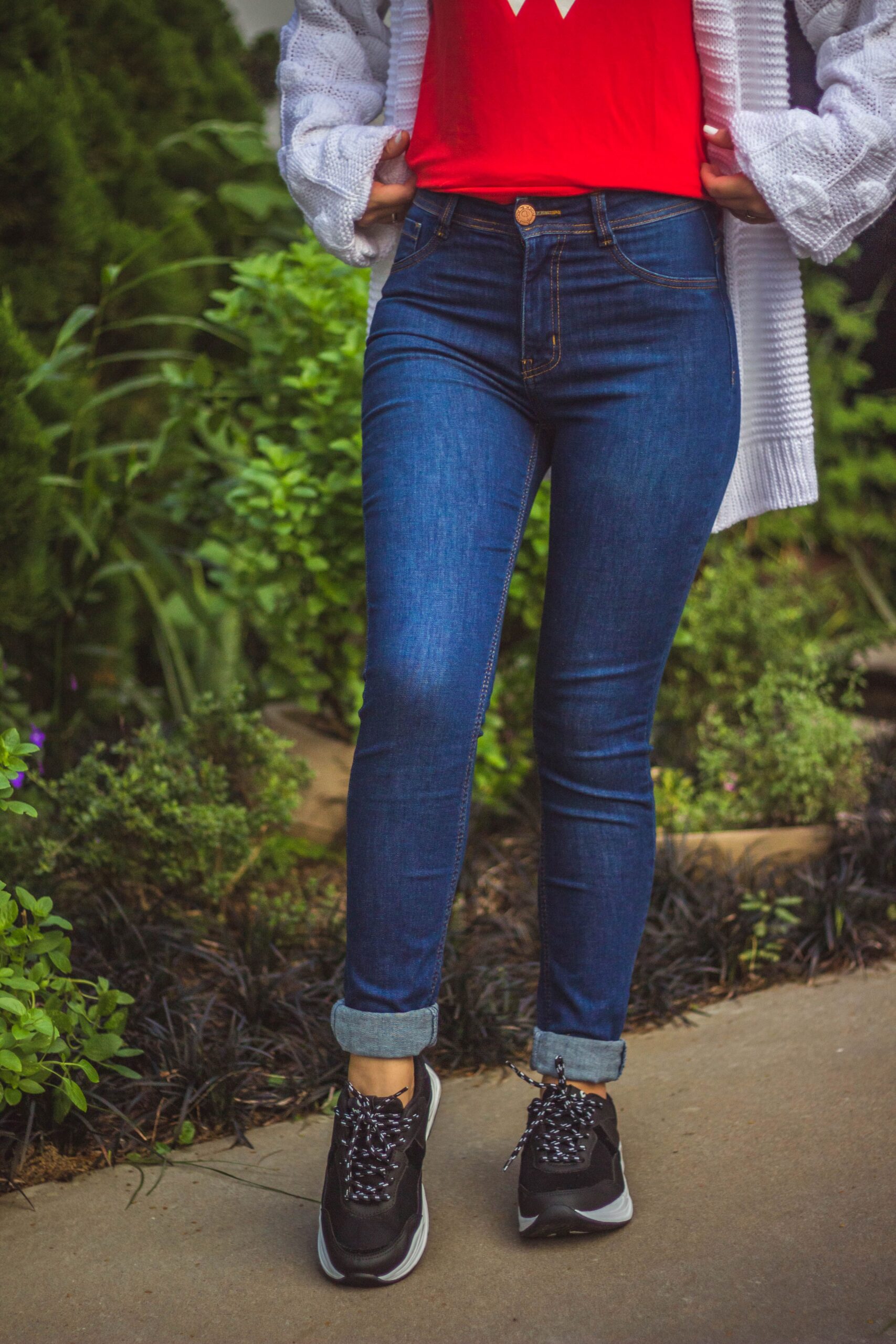
    Unlike loose-fitting trousers or elastic-waist clothing, denim can be relatively stiff and restrictive. Tight jeans, high-waisted styles and complicated fastenings may make it harder to adjust your clothing comfortably.

    Your first priority should be being able to move naturally and maintain a stable position. If your jeans make that difficult, you may prefer to practice in something more flexible before trying again in denim.

    Which types of jeans are easiest to manage?

    Not all jeans are created equal. Here are a few things to consider when choosing what to wear.

    1. Stretch denim

    Jeans with a little stretch can offer more flexibility than rigid denim. A comfortable amount of elastane or stretch fabric may make it easier to move and adjust your clothing.

    Look for jeans that allow you to bend and move without feeling restricted.

    2. Relaxed-fit jeans

    Straight-leg, relaxed-fit and other less restrictive styles may be more comfortable than very tight skinny jeans.

    A little extra room can make adjusting your clothing easier and reduce the feeling of being squeezed into an awkward position.

    3. Comfortable waistbands

    High-waisted jeans aren’t automatically a problem, but the waistband and fastening can affect how easy the clothing is to manage.

    Consider whether you can comfortably adjust your jeans without struggling with buttons, zips or a tight waistband.

    4. Jeans with practical fastenings

    If you’re wearing jeans with several buttons, complicated closures or a particularly tight fit, getting ready may take longer.

    Simple, easy-to-manage fastenings can make a difference when you’re learning.

    What about skinny jeans?

    Skinny jeans can be more challenging because they fit closely around the legs and may restrict movement.

    That doesn’t mean they’re impossible for everyone, but they may not be the most comfortable choice when you’re starting out.

    If you’re still learning the basics, try a more relaxed style first. Once you’re comfortable with your technique, you can decide whether your usual jeans work for you.

    Don’t forget about underwear

    Your choice of underwear can also affect how comfortable and practical your clothing feels.

    Consider underwear that fits comfortably and can be adjusted without too much effort. Avoid anything that feels restrictive or makes movement awkward.

    There isn’t one perfect style for everyone. The best choice is the one that allows you to move comfortably and maintain control.

    A few clothing tips for beginners

    If you’re planning to practice wearing jeans, these simple suggestions may help:

    • Start with stretch denim. Flexible fabric can be easier to manage than stiff, rigid jeans.
    • Choose a comfortable fit. Avoid clothing that restricts your movement.
    • Keep things simple. Easy fastenings can make adjusting your clothes less frustrating.
    • Practice in familiar clothing first. Get comfortable with the technique before introducing more challenging outfits.
    • Don’t rush. Allow yourself enough time and privacy to practice without pressure.

    It’s also worth remembering that clothing choices are personal. What works for one woman may not work for another.

    What if jeans aren’t practical?

    There’s no reason to make learning harder than it needs to be.

    If your jeans feel restrictive, try practising in comfortable leggings, relaxed trousers or other clothing that allows you to move more freely.

    You can always experiment with different outfits later. The goal is to build a technique that feels comfortable and manageable for your body.

    Do you need a special device to pee standing up in jeans?

    Not necessarily. There are products on the market designed to help women pee standing up, but Stand2Pee focuses on learning the technique without depending on funnels or disposable gadgets.

    Understanding your body, choosing suitable clothing and developing confidence are all part of the process.

    Confidence starts with knowing your options

    So, can women pee standing up in jeans? It may be possible, depending on your clothing, comfort and technique.

    Stretch denim, relaxed fits and simple fastenings may make things easier, especially while you’re learning. If your jeans feel too restrictive, there’s nothing wrong with choosing a more practical outfit.

    The most important thing is to find what works for you. You don’t have to change your entire wardrobe — just give yourself the time and flexibility to learn.

    Ready to discover a gadget-free approach? See Stand2Pee’s instructional video and start building confidence in a practical skill you can take with you.

  • 5 Common Mistakes Women Make When Learning to Pee Standing Up

    5 Common Mistakes Women Make When Learning to Pee Standing Up

    Learning to pee standing up can feel like a completely new experience. You might be curious about the technique, excited about having another option when you’re outdoors, or simply keen to see whether you can do it.

    But, as with any new skill, the first few attempts may involve a little trial and error.

    The good news? Many beginner frustrations come down to a handful of common mistakes that are easy to understand and work on.

    At Stand2Pee, we believe women should feel comfortable learning at their own pace. Here are five things to watch out for when you’re getting started.

    1. Expecting to get it right on the first attempt

    This is probably the biggest beginner mistake: assuming that because the idea sounds simple, the technique should be effortless immediately.

    In reality, you’re learning a new combination of positioning, balance, coordination and control. It may take a few attempts before everything starts to feel familiar.

    How to avoid it: Give yourself permission to be a beginner. Choose a private, relaxed setting and focus on learning rather than getting a perfect result. If your first attempt isn’t successful, take a break and try again another time.

    Remember, progress is more important than perfection.

    2. Rushing the process

    When you’re learning something new, it’s tempting to hurry through it, especially if you’re worried about making a mess or taking too long.

    However, rushing can make it harder to concentrate on your positioning and understand what works for you.

    How to avoid it: Allow yourself enough time. Start somewhere familiar, where you won’t feel pressured or interrupted. Pay attention to your posture and make small adjustments if needed.

    There’s no prize for learning in record time!

    3. Forgetting about posture and balance

    Standing comfortably and maintaining a stable position are important parts of the learning process.

    If you’re concentrating so hard on one part of the technique that you forget about your balance, you may find the experience more difficult than it needs to be.

    How to avoid it: Start with a comfortable, stable stance. Avoid awkward positions that make you feel unsteady, and take the time to understand how small changes in posture affect your comfort and control.

    Your body is your own, so don’t assume that one position will work identically for everyone.

    4. Practising when you’re stressed or uncomfortable

    Trying to learn a new physical skill when you’re in a hurry, distracted or anxious can make the experience frustrating.

    If you’re already worried about being interrupted, getting your clothes wet or having limited time, you may struggle to focus on the technique.

    How to avoid it: Choose a calm moment when you have privacy and access to suitable facilities. Keep practice sessions relaxed and stop if you’re becoming uncomfortable or frustrated.

    Don’t deliberately hold your urine to create a practice opportunity. There’s no need to put your body under pressure to learn.

    5. Giving up after one difficult attempt

    Perhaps your first attempt didn’t go as expected. Maybe your positioning felt awkward, or you didn’t feel confident about your control.

    It’s easy to decide that the skill isn’t for you — but one difficult attempt doesn’t tell you everything.

    How to avoid it: Think of each attempt as a learning experience. Consider what felt comfortable, what didn’t and whether a small adjustment might help next time.

    You can also revisit the basics instead of trying to make lots of changes at once. Learning gradually can make it easier to understand what works.

    A few extra tips for beginners

    Avoiding these five mistakes can make learning feel less daunting. Here are a few additional ways to make your practice sessions more comfortable:

    • Start somewhere familiar. A private bathroom is a sensible place to become comfortable with the basics.
    • Wear something comfortable. Choose clothing that allows you to move naturally and doesn’t make positioning unnecessarily difficult.
    • Keep expectations realistic. Everyone’s body and learning experience are different.
    • Take breaks. If you’re frustrated, there’s nothing wrong with stopping and returning to it another day.
    • Remember that toilets still matter. Standing to pee is an additional skill, not a replacement for suitable toilet facilities.

    If you experience pain, burning or unusual urinary symptoms, stop practising and seek medical advice rather than treating those symptoms as a normal part of learning.

    Do you need special equipment?

    Not necessarily. There are products designed to help women pee standing up, but the technique can be learned without relying on a funnel or disposable device.

    That’s the approach behind Stand2Pee: helping women learn a practical skill and build confidence without adding another gadget to their travel or outdoor kit.

    Where could this skill be useful?

    Once you’ve developed a technique that feels comfortable, you may find it useful in certain situations — perhaps on a camping trip, during a hike or while travelling.

    Of course, convenience doesn’t mean ignoring safety, privacy or local rules. Use suitable toilet facilities whenever possible, and only consider outdoor urination where it’s legal, safe, private and environmentally appropriate.

    Learn at your own pace

    Making mistakes is part of learning. The important thing is not to let a frustrating first attempt convince you that you can’t develop the skill.

    Avoid rushing, pay attention to your comfort and give yourself time to build confidence.

    With a patient approach, you can find out what works for your body and decide when standing to pee might be a useful option.

    Ready to learn more? Watch our Stand2Pee instructional video for a practical, gadget-free introduction to learning how to pee standing up.

  • How Long Does It Take to Learn to Pee Standing Up?

    How Long Does It Take to Learn to Pee Standing Up?

    If you’ve ever wondered whether you could learn to pee standing up, you’re probably asking another question too: How long will it take me to get the hang of it?

    The good news is that learning to pee standing up is a practical skill, and like many new skills, it becomes easier with patience and practice. There isn’t a universal timetable. Some women feel comfortable with the basics quite quickly, while others need more time to develop their technique and confidence.

    At Stand2Pee, we believe that learning should feel straightforward, encouraging and achievable. You don’t need to rush, and you don’t need to be perfect on your first attempt.

    So, how long does it actually take?

    There’s no scientifically established average time for women to learn to pee standing up. Your learning curve will depend on several things, including your comfort level, coordination, body positioning and how regularly you practise.

    You might notice progress after a few practice sessions. For others, it may take longer to feel consistent and relaxed.

    Rather than setting yourself a deadline, focus on getting comfortable with the technique one step at a time. The aim is not simply to manage it once, but to develop a skill you can use confidently when it suits the situation.

    What affects how quickly you learn?

    A few factors can make the learning process easier or more challenging.

    1. Your starting confidence

    If the idea feels unfamiliar, you may be a little tense at first. That’s completely normal. Feeling nervous can make it harder to relax and concentrate on what you’re doing.

    Give yourself permission to learn privately and at your own pace. There’s no audience, no test and no need to prove anything.

    2. Your body positioning

    Finding a comfortable, stable position is an important part of learning. Small adjustments to your stance, posture and balance can make a difference.

    Avoid rushing through the process. Take time to understand what feels natural for your body.

    3. Your ability to relax

    Trying too hard can make a new physical skill feel more complicated than it needs to be. A calm environment and an unhurried approach can help you concentrate.

    Choose a time when you have privacy and aren’t under pressure. Never practise by deliberately holding your urine or making yourself uncomfortable.

    4. How consistently you practise

    Like learning to ride a bicycle or mastering a new movement, repetition can help build familiarity.

    Short, relaxed practice sessions are generally more useful than repeatedly trying when you’re frustrated. Take a break if you feel uncomfortable or discouraged.

    A simple approach to getting started

    You don’t need to turn learning into a big project. Try breaking it into manageable stages.

    Step 1: Get comfortable with the idea.
    Start by understanding the basic technique and what you’ll need to pay attention to. Knowing what to expect can make the first attempt feel less intimidating.

    Step 2: Choose a private, relaxed setting.
    Practise somewhere you feel comfortable, with suitable facilities and enough time. A familiar bathroom is a sensible place to begin.

    Step 3: Focus on positioning and control.
    Pay attention to balance, posture and how your body responds. Make small adjustments rather than trying to force a particular result.

    Step 4: Be patient with yourself.
    Your first attempt might not go exactly as planned. That doesn’t mean you can’t learn. Treat it as useful feedback and try again another time.

    Step 5: Build confidence gradually.
    Once you’re more comfortable with the basics, you can decide whether and when the skill might be useful in everyday life or during outdoor activities.

    Common beginner frustrations — and why they’re normal

    Learning something new can involve a few awkward moments. You might find that your positioning needs adjustment, that you’re more tense than expected, or that you need several attempts to feel comfortable.

    Try not to interpret a difficult first session as failure.

    A few helpful reminders:

    • You don’t need to master everything immediately.
    • A little patience is more useful than putting yourself under pressure.
    • Everyone’s learning experience is different.
    • You can pause and return to practising whenever you’re ready.
    • If you experience pain, burning or other unusual urinary symptoms, stop practising and seek appropriate medical advice rather than assuming it’s part of learning.

    When might the skill come in handy?

    Once you’re comfortable with the technique, standing to pee may offer another option in situations where it suits you.

    For example, it could be useful when you’re camping, hiking or travelling, provided you have a suitable, private and hygienic place to do so. It may also give you more flexibility when choosing clothing or planning certain outdoor activities.

    It’s important to remember that this skill doesn’t replace toilets. Public facilities remain the appropriate choice whenever they’re available and suitable, and outdoor urination should only be considered where it is legal, safe, private and environmentally responsible.

    You don’t need gadgets to learn a skill

    There are products on the market designed to help women pee standing up. But learning the technique itself doesn’t have to mean buying or carrying a special device.

    Stand2Pee is all about helping women understand the technique and develop confidence in their own ability. The focus is on learning a practical skill, not becoming dependent on another item in your bag.

    The most important thing is progress, not speed

    So, how long does it take to learn to pee standing up? The honest answer is that it varies. You may get comfortable with the basics sooner than you expect, or you may need a little more time.

    Give yourself space to practise, keep your expectations realistic and celebrate small improvements.

    You don’t have to get it perfect straight away. You just have to be willing to learn.

    Ready to give it a try? Explore Stand2Pee’s instructional video and discover a practical, gadget-free approach to learning how to pee standing up.

  • Breaking the Taboo: Why We Don’t Talk About Women’s Bathroom Needs

    It’s something every woman experiences — yet almost no one talks about it.

    Bathroom access.

    From travel planning to daily routines, it quietly influences decisions, comfort, and confidence.

    So why is it still considered a taboo topic?


    The Silence Around a Universal Experience

    For generations, conversations around women’s bodies — especially basic needs — have been minimized or avoided.

    As a result:

    • Many women feel discomfort discussing it openly
    • Practical challenges go unaddressed
    • Solutions and skills aren’t widely shared

    The Cost of Not Talking About It

    When we don’t talk about it, we normalize limitations:

    • Planning life around bathroom access
    • Avoiding certain activities
    • Accepting discomfort as “just the way it is”

    Reclaiming Confidence Through Awareness

    The more we normalize these conversations, the more options women realize they have.

    Learning to pee standing up naturally is one example of a simple skill that challenges long-held assumptions.

    It’s not about changing who you are — it’s about expanding what you know is possible.


    Why This Conversation Matters

    Talking about bathroom needs:

    • Reduces stigma
    • Builds confidence
    • Encourages independence

    It turns something hidden into something empowering.


    Final Thought

    There’s nothing unusual about needing comfort, confidence, and control.

    The more openly we talk about it, the more freedom women gain.

    And sometimes, change starts with simply starting the conversation.

  • Best Clothing Choices for Outdoor Comfort and Easy Bathroom Access

    Best Clothing Choices for Outdoor Comfort and Easy Bathroom Access

    When planning an outdoor adventure, most people focus on weather, footwear, and gear.

    But there’s one factor that often gets overlooked:

    Your clothing — and how it impacts your comfort when nature calls.

    The right clothing can make all the difference in how easy, quick, and stress-free your experience is.


    Why Clothing Matters More Than You Think

    Outdoor situations aren’t always predictable.

    You might encounter:

    • Limited restroom access
    • Time-sensitive situations
    • Less-than-ideal environments

    Clothing that’s restrictive or complicated can turn a simple moment into a frustrating one.


    What to Look For

    The best outdoor clothing choices prioritize:

    1. Ease of Movement

    Flexible fabrics make it easier to adjust quickly and comfortably.

    2. Simple Designs

    Avoid overly complicated layers, straps, or closures.

    3. Quick Access

    Clothing that can be adjusted easily helps reduce stress in time-sensitive situations.

    4. Comfort First

    Soft, breathable fabrics help you stay relaxed and confident.


    What to Avoid

    • Tight, restrictive outfits
    • Complicated jumpsuits or rompers
    • Multiple layers that take time to remove

    A Skill That Complements It All

    Clothing is only part of the equation.

    Learning to pee standing up naturally works hand-in-hand with smart clothing choices — giving you even more flexibility and control.


    Final Thought

    The right clothing doesn’t just look good — it supports your comfort, confidence, and freedom.

    When you combine smart clothing choices with practical skills, outdoor experiences become simpler, easier, and far more enjoyable.

    Comfort starts with preparation — and confidence.

  • Public Restrooms vs. Nature: Which Is Actually Cleaner?

    Public Restrooms vs. Nature: Which Is Actually Cleaner?

    When nature calls, most people instinctively look for a bathroom. It feels like the safest, cleanest option.

    But is that actually true?

    Let’s take a closer look at how public restrooms compare to nature when it comes to hygiene — and why more women are rethinking what “clean” really means.


    The Reality of Public Restrooms

    Public restrooms are shared spaces used by hundreds — sometimes thousands — of people every day.

    Even when cleaned regularly, they often include:

    • High-touch surfaces like handles, locks, and flush buttons
    • Wet or unclean floors
    • Limited maintenance during peak hours

    In busy environments like parks, festivals, or travel hubs, cleanliness can vary dramatically.


    Nature Offers Something Different

    In contrast, outdoor environments provide:

    • Space and privacy
    • Fresh air
    • No shared surfaces

    When done responsibly, choosing a private outdoor spot allows for more control over your surroundings — something public restrooms can’t offer.


    A Shift in Perspective

    For many women, the biggest limitation has always been how to go comfortably outdoors.

    Learning to pee standing up naturally changes that.

    It allows you to:

    • Avoid direct contact with questionable surfaces
    • Choose cleaner, more private environments
    • Feel more confident in unpredictable situations

    Hygiene Is About Control

    Cleanliness isn’t just about where you are — it’s about what you can control.

    Public restrooms require you to adapt to the environment.
    Nature allows you to choose it.

    With simple preparation (like tissue and sanitizer), many women find outdoor options feel more hygienic than crowded facilities.


    Final Thought

    The idea that public restrooms are always the cleanest option isn’t always accurate.

    Sometimes, the cleaner choice is the one that gives you more control, more space, and more confidence.

    And that starts with learning what your body is capable of.